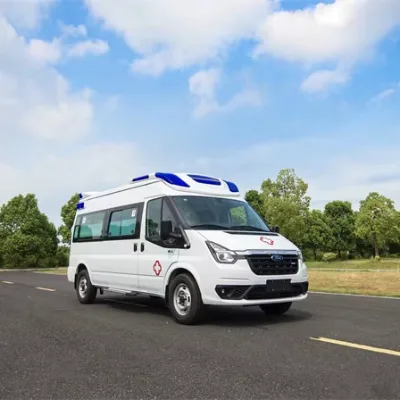
Source European Standard Ambulance with Medical Equipment for Transport, Rescue, and Infection Control
Compare 30 European standard ambulance with medical equipment units featuring diesel or gasoline engines, manual and automatic transmissions, and customizable designs. These vehicles support transporting injured patients, viral infection cases, and emergency rescue operations with single or micro axles.
Key considerations
Products List


$60000.00 - $90000.00
Moq: 1


Emergency Response Ambulance: New Energy Medical Vehicle with Lead Protection
$440000.00 - $1100000.00
Moq: 1

Rescue-Ready Medical Vehicle: New Energy Ambulance with Speed and Safety
$440000.00 - $1100000.00
Moq: 1

High-Performance Rescue Vehicle: New Energy Medical Ambulance for Emergencies
$440000.00 - $1100000.00
Moq: 1




Comprehensive Sourcing Guide
Strategic Sourcing Guide for European Standard Ambulances with Medical Equipment
Procuring specialized medical transport vehicles requires a rigorous approach that balances technical specifications with regulatory compliance. The core keyword "European standard ambulance with medical equipment" points to a specific segment of the automotive and medical device market where vehicle chassis, interior configuration, and safety features must align with stringent international norms. Buyers entering this market must navigate a landscape defined by precise engineering parameters, diverse certification requirements, and the critical need for reliability in emergency scenarios. This guide outlines the essential factors for sourcing these vehicles, focusing on the observable attributes of the current market supply while emphasizing the verification steps necessary for a successful procurement strategy.
Technical Specifications and Vehicle Architecture
The foundation of a compliant ambulance lies in its physical and mechanical architecture. Market observations indicate that vehicles in this category typically feature a horsepower range between 100 and 210 hp, allowing for a spectrum of performance capabilities depending on the intended operational environment. Buyers should expect to encounter models with diesel fuel systems as the primary power source, although gasoline variants are also present in the supply chain. The transmission types observed include both manual and automatic configurations, offering flexibility based on driver preference and local traffic conditions.
Dimensions are a critical constraint when sourcing vehicles that must navigate urban environments while providing adequate interior space for medical equipment. The length of these units generally falls within the 3 to 8-meter range, accommodating various chassis sizes. Wheelbase measurements are specific, with common configurations observed at 3300 mm and 3350 mm, which directly influence the vehicle's turning radius and stability. The exterior dimensions often adhere to specific standard profiles, such as 5341 mm in length, 2032 mm in width, and 2460 mm in height, or similar variations like 5495 mm by 1998 mm by 2540 mm. These dimensions ensure compatibility with standard transport protocols and garage facilities.
The chassis configuration varies significantly. While single-axle setups are common for lighter units, some models feature a micro-axle configuration or a six-tire arrangement to support higher total mass ratings, such as 3550 kg. Suspension systems, including Macpherson independent suspension, are utilized to ensure a smooth ride, which is vital for patient comfort and the stability of sensitive medical equipment during transit. The number of tires typically ranges from four to six, reflecting the load-bearing requirements of the vehicle.
Compliance and Certification Verification
Navigating the certification landscape is perhaps the most complex aspect of sourcing European standard ambulances. The market data reveals a variety of certifications that suppliers may claim, including ISOCCC, TSEPA, EEC, RoHS, and CE. These acronyms represent different regulatory frameworks, and buyers must verify which specific standards apply to their target market. For instance, the EEC (Economic Commission for Europe) and CE marks are often associated with European compliance, while ISOCCC and TSEPA may relate to specific environmental or quality management systems.
Emission standards are another critical compliance factor. The observed data indicates a split between Euro-compliant diesel and gasoline engines, with horsepower ranges often tied to specific emission tiers. Buyers must confirm that the vehicle meets the specific Euro emission standard required by their local jurisdiction, as this can vary significantly between regions. The "European Standard" designation in product specifications suggests an alignment with these norms, but it is not a guarantee of compliance without specific documentation.
Furthermore, the production standards listed, such as 5521×2032×2460 or 5341X2032X2460, appear to be internal or specific dimensional standards rather than universal safety codes. Buyers should not assume these numbers represent a recognized safety standard like EN 1789 without explicit confirmation from the supplier. The verification process must include requesting valid certificates for each claimed certification, ensuring they are current and issued by recognized bodies.
Cost Drivers and Pricing Structures
The pricing for European standard ambulances with medical equipment is highly variable, reflecting the complexity of the build and the level of customization. The observed price range spans from approximately 5,600 USD to 1,100,000 USD. This vast disparity is driven by several key factors. The base cost is influenced by the chassis type, engine horsepower, and transmission system. A vehicle with 210 hp and an automatic transmission will inherently cost more than a 100 hp manual model.
Customization is a major cost driver. The market data confirms that customization is available, allowing buyers to tailor the interior layout, medical equipment integration, and exterior color. Customized exteriors and specific interior configurations for transporting injured, sick, or viral infection patients add significant value and cost. The "Transit Type Monitoring Type" design mentioned in the specifications suggests advanced monitoring capabilities, which would further increase the price.
Packing and logistics also contribute to the final cost. Options range from nude packing to container or bulk cargo shipping, with specific terms like RO-RO (Roll-on/Roll-off) and container shipping available. The origin of the vehicle, primarily from Hubei or Suizhou in China, influences the base manufacturing cost, but shipping distances and methods will affect the landed cost. Buyers should be aware that the Minimum Order Quantity (MOQ) is typically 1 unit, allowing for flexible procurement strategies, though bulk orders may offer different pricing structures not explicitly detailed in the current data.
Typical Applications and Operational Use Cases
The primary application for these vehicles is the transport of injured, sick, or viral infection patients. The "Usage" attribute explicitly highlights this function, necessitating a design that prioritizes patient safety and infection control. The "Nice Shape, Rational Structure" feature suggests an ergonomic design intended to facilitate the efficient loading and unloading of patients and medical staff.
These ambulances are designed to operate in diverse environments, from urban centers to rural areas. The suspension systems and chassis stability are crucial for maintaining patient stability during transit. The presence of medical equipment is a defining characteristic, and the interior must be configured to support this. The "Design" attribute mentioning "Transit Type Monitoring Type" implies that these vehicles are equipped with systems to monitor patient vitals during transport, a critical feature for critical care ambulances.
The versatility of the vehicle is enhanced by the availability of different horsepower ratings and fuel types. A 160-210 hp diesel model might be preferred for long-distance inter-facility transfers, while a 100-160 hp gasoline model might be more suitable for urban emergency response where agility and lower emissions are prioritized. The specific model numbers, such as CLW5044XJHCDP or AAK5044XYLJX6, often correspond to specific configurations tailored for these varied use cases.
Supplier Evaluation and Origin Analysis
When evaluating suppliers, the origin of the vehicle is a significant data point. The majority of the observed products originate from China, specifically from the Hubei and Suizhou regions. These regions are known for their automotive manufacturing capabilities. Buyers should assess the supplier's production capacity and history in these locations. The fact that customization is available suggests that these suppliers are capable of adapting their standard models to meet specific buyer requirements.
The "OEM" (Original Equipment Manufacturer) attribute being "Yes" indicates that suppliers are willing to produce vehicles under the buyer's brand or specific specifications. This is a crucial capability for organizations looking to brand their fleet. However, buyers must verify the supplier's ability to maintain quality control across different batches. The presence of multiple model numbers suggests a diverse product line, but it also requires careful selection to ensure the chosen model meets the specific operational needs.
Supplier reliability can be gauged by the clarity of their product specifications. The detailed listing of dimensions, axle types, and tire counts indicates a level of transparency. However, buyers should remain cautious of vague claims regarding "European Standard" without supporting documentation. The verification of certifications and the ability to provide test results or performance data should be a prerequisite for engagement.
Quality Control and Long-Term Procurement Considerations
Ensuring long-term reliability requires a robust quality control strategy. The "Condition" of the vehicles is listed as "New," but this does not preclude the need for rigorous pre-delivery inspections. Buyers should verify the manufacturing standards, such as the specific production standards listed (e.g., 5521×2032×2460), to ensure they align with safety and durability expectations.
Long-term procurement considerations include the availability of spare parts and service support. Given the origin of the vehicles, buyers should establish clear agreements regarding the supply chain for replacement parts. The "prod_packing" options, including container or bulk cargo, should be evaluated for their impact on the logistics of receiving and storing spare parts.
Maintenance of the medical equipment is another critical factor. The "Feature" of "Rational Structure" suggests that the interior is designed for ease of maintenance, but buyers must confirm that the medical devices installed are compatible with the vehicle's power systems and can be serviced locally. The "Total Mass" and "Axle" configurations also impact maintenance schedules, as heavier loads may require more frequent inspections of the suspension and braking systems.
Comparative Analysis of Key Vehicle Attributes
To assist in the decision-making process, the following table summarizes the key observable attributes of the vehicles in this category. This comparison highlights the variability in specifications that buyers must navigate.
| Attribute | Observed Range/Options | Procurement Consideration |
|---|---|---|
| Horsepower | 100-160 hp, 160-210 hp | Match to terrain and load requirements. |
| Fuel Type | Diesel, Gasoline | Verify emission compliance for local regulations. |
| Transmission | Manual, Automatic | Consider driver training and traffic conditions. |
| Length | 3-8 m | Ensure fit for local garages and road restrictions. |
| Axle Type | Single, Micro | Check load capacity and stability needs. |
| Tires | 4, 6 | Assess durability and replacement availability. |
| Certifications | ISOCCC, TSEPA, EEC, RoHS, CE | Verify validity and relevance to target market. |
| Origin | China (Hubei, Suizhou) | Evaluate logistics and supply chain stability. |
| Customization | Available | Define specific medical and branding requirements early. |
Conclusion
Sourcing a European standard ambulance with medical equipment is a multifaceted process that demands attention to technical details, regulatory compliance, and supplier capabilities. The market offers a wide range of options, from basic 100 hp models to high-performance 210 hp units, each with unique configurations regarding dimensions, fuel, and transmission. Buyers must rigorously verify certifications and emission standards, as the "European Standard" label requires concrete evidence of compliance. By understanding the cost drivers, such as customization and logistics, and by carefully evaluating suppliers based on their origin and OEM capabilities, buyers can secure vehicles that meet the critical needs of emergency medical services. The ultimate goal is to acquire a reliable, compliant, and well-equipped asset that ensures the safe transport of patients while adhering to all relevant international and local regulations.
FAQs
What certifications do these ambulances hold?
These vehicles typically hold ISOCCC, TSEPA, EEC, RoHS, and CE certifications. Buyers must verify specific documents for their target market, as EEC and CE relate to European compliance while others address environmental or quality standards.
Which horsepower ranges are available for these units?
Available horsepower ranges span from 100 to 160 hp and 160 to 210 hp. Diesel is the primary fuel type, though gasoline variants exist, with transmission options including both manual and automatic configurations.
Can I customize the exterior color and interior design?
Yes, customization is available for exterior colors and interior layouts. The design supports transporting injured or viral infection patients, with options for Transit Type Monitoring and rational structures to facilitate efficient loading.
What are the typical dimensions and wheelbase measurements?
Lengths generally range from 3 to 8 meters with wheelbases of 3300 mm or 3350 mm. Standard exterior profiles often measure around 5341 mm by 2032 mm by 2460 mm to ensure garage compatibility.
How many tires and axles do these ambulances have?
Most units feature four tires with single axles, while some heavier models have six tires and micro-axle configurations. Total mass ratings can reach 3550 kg, requiring specific suspension systems like Macpherson independent suspension.
Where are these vehicles manufactured and what is the MOQ?
Vehicles originate from Hubei and Suizhou in China with a minimum order quantity of one unit. Buyers can expect OEM options and various packing methods including container, bulk cargo, or RO-RO shipping.